Where Wine Country Finds Its Rhythm
There is a certain point when a winery stops being simply a place to taste wine and becomes a place people return to for the atmosphere.
Miramonte Winery has long occupied that territory in Temecula.
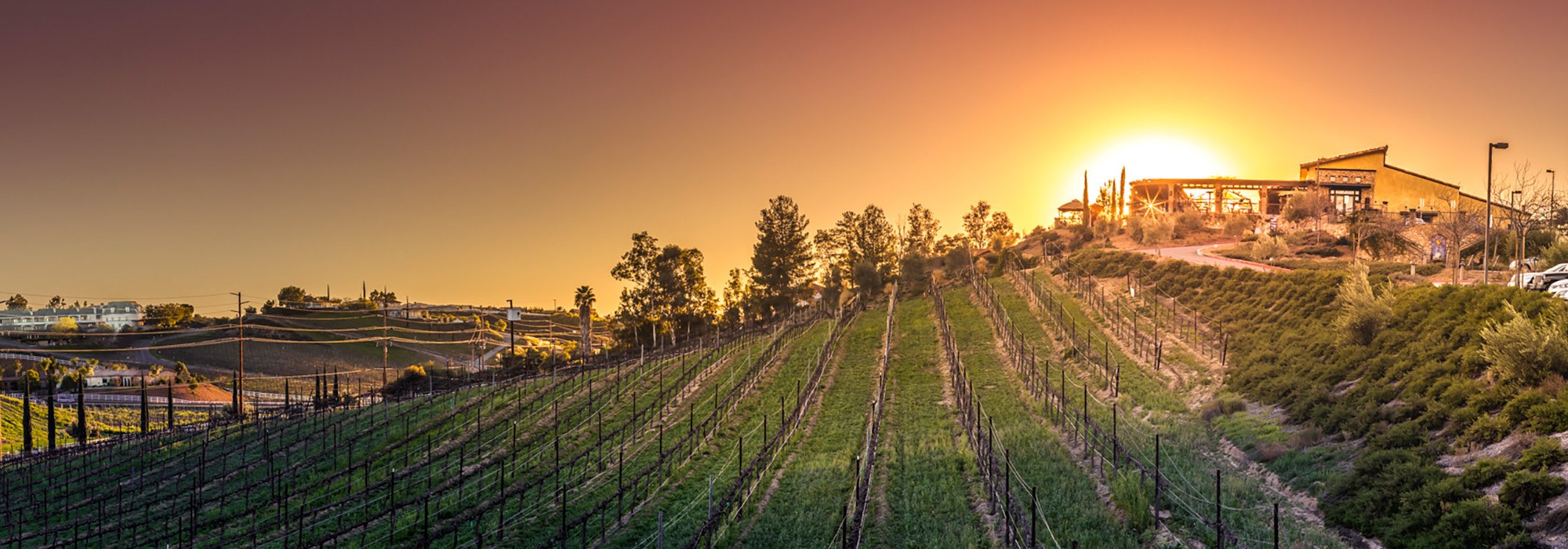
Set on a small hill along Rancho California Road, the winery looks out across the valley from a hillside garden veranda, with vineyards and open wine-country scenery stretching into the distance. The setting immediately gives the property a sense of elevation without making the experience feel removed from the valley below.
But the view is only the beginning.
Founded in 2001 when Cane Vanderhoof purchased and renamed the former Piconi Winery, Miramonte quickly developed an identity of its own. The winery replanted its estate vineyard with Syrah clones and began championing Rhône varieties, later expanding its focus to include grapes associated with Spain and Portugal and other southern European wine traditions.
That willingness to look beyond the expected has become part of Miramonte’s character.
The wines tell the story in the glass. Syrah, Tempranillo, Mencía, Touriga, Verdelho, Albariño and other Mediterranean-influenced varieties appear alongside more familiar California selections. Current releases include estate Syrah, Tempranillo, Mencía, Cabernet Sauvignon and the winery’s distinctive Opulente wines.
Miramonte’s tasting room itself remains approachable. The classic tasting is conducted at the bar, with six wines presented with guidance from the tasting-room staff. For visitors looking for something more intimate, the Guided Estate Tasting moves into a semi-private setting, pairing eight wines with chef-prepared small bites over roughly an hour and a half to two hours.
The difference between the two experiences says something about Miramonte as a whole.
It can be a traditional winery visit, focused on the wines and the conversation surrounding them. Or it can become an extended afternoon of food, music, scenery and lingering.
That evolution is part of the winery’s history.
In 2002, Miramonte began staying open later for live entertainment at a time when evening winery entertainment was still unusual in Temecula. The winery credits that decision with helping establish a broader wine-country culture in which wineries became destinations for music and social gatherings rather than places that closed shortly after the afternoon tasting crowd departed.
Today, that legacy is unmistakable.
Miramonte’s calendar extends well beyond traditional wine events. Live music, open-mic nights, salsa and Latin dance, themed evenings, tribute performances, game nights and seasonal celebrations appear throughout the schedule. Current programming continues that tradition, with music ranging from jazz, neo-soul and funk to classic rock and other live performances.
And then there is the food.
The winery’s bistro occupies the upper veranda, where scratch-made food, wine and the surrounding scenery become part of the same experience. Miramonte opened the Flower Hill Bistro in 2015, describing it as a casual but inspired venue for food, wine and entertainment. Its current offerings include weekend brunch as well as lunch and dinner-oriented service.
This is where Miramonte’s hillside location becomes especially effective.
A wine tasting is naturally focused on the glass in front of the guest. A meal changes the pace. Add the view, music drifting across the property and the possibility of watching the light change over the valley, and the experience becomes less about completing a tasting and more about spending time in wine country.
For those who want an even more private version of that experience, Miramonte also offers cabanas and dedicated outdoor spaces.
Its wine-club members have access to a members’ lounge featuring cabanas, a private bar, firepits, indoor and outdoor lounge areas and food service.
The winery’s Sol Society wine club reflects another important part of Miramonte’s identity: community.
Rather than treating wine-club membership simply as a way to receive shipments, Miramonte has built membership around recurring experiences—music, food, gatherings, special events and time spent at the winery. That emphasis reinforces the idea that Miramonte is as much a social destination as it is a tasting room.
Yet beneath all of that activity is a serious wine program.
The winery’s early commitment to Rhône varieties helped establish a point of difference in Temecula, while its subsequent exploration of Spanish and Portuguese grapes expanded that identity. The result is a portfolio that feels unusually broad in its geographic inspiration without losing its connection to Southern California.
Perhaps that is what makes Miramonte particularly interesting within Temecula’s evolving wine landscape.
It helped demonstrate that wine country could have a soundtrack.
It could extend into the evening. It could include dinner. It could be a place to dance, listen to music, meet friends, watch the sunset or return regularly as part of a community.
And yet, at the center of it all, there is still the simple ritual that brought visitors to wine country in the first place: a glass of wine, a view across the vines and a little time to enjoy both.
The Bellie Acres Perspective
Miramonte represents the social side of Temecula wine country—a place where wine, food, music and landscape naturally occupy the same table. Its importance lies not only in the wines it produces, but in the role it has played in making the winery itself part of the destination. Miramonte is wine country with a pulse: scenic, spirited and designed to be enjoyed long after the first pour.